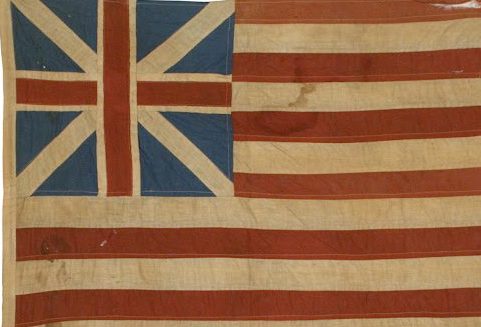
We care about Britain because we see it as a font, and so it is — although it is really England that is the font. America is rooted in England… and so England becomes surpassingly important for us. We do not understand ourselves without understanding it. (Joshua Trevino)
The secular liberal mind does not understand the world in theological terms, and thus is incapable of understanding its enemies. But this shortcoming can also make it incapable of understanding its allies too.
The world has changed; the old order has fallen. American leadership rests now with a political cadre enlivened with a sense that the threat faced by the collective West is not merely political, but civilisational. In this they both mirror and encapsulate the energy and seriousness of a feverish new populism, having grown weary of the technocratic proceduralism of the liberal settlement and certain, not only that history matters – that it has meaning – but that in navigating its turbulent waters one must play the lead in an epic that has metaphysical, and not merely material, import. For minds such as these, the end of history did not arrive, and our time must be written anew. It is liberalism as it existed that has reached its end point; its good and faithful servants must now choose.
We in Britain struggle to take this seriously. We are more cynical, naturally suspicious of what our forebears – at least those that refused the allure of the colonies – might have called Enthusiasm. But in a re-enchanted realpolitik, this is to our discredit; it sets us at disadvantage. It blinds us to a world pregnant with new meaning, at least in the eyes of those shaping it. In short, the angels and demons have returned to the American political imagination – and the stakes are much bigger than mere politics. In the exhortations of one close to the vice presidential circle, live not by lies – and the lie is what until recently would have been recognised the world over as the most basic assumptions of the progressive liberal worldview.
Thus, the capacity of the current American regime to accept the inherited order – formed as they are by a quixotic postliberalism that, whatever its current guise, nontheless posits degrees of chaos as the logical endpoint of the liberal system – is strictly limited. It would be tantamount to embracing one’s defeat. Besides, the material analyses and the philosophical hue neatly align. The ‘rules-based’ international order that was supposed to protect American hegemony has been fashioned against it; the tangled web of alliances and associated dependencies unravelling. In simple terms, Trump has determined the US is getting a bad deal, and he has won the support of the working class of his country who have borne the brunt of the globalist dream and concluded the same. The world has been wrenched free of its certainties, whilst the globalist articles of faith – dressed in the language of collaboration and partnership – have proven to require too great a sacrifice: of jobs, of identity, of dignity.
But we do not talk only of trade deficits and pay checks. For the MAGA mood has determined that the practical impacts are merely the collateral in a bigger, existential war – for them, it is the Western soul that is really at stake. It is from this vantage point – this theological mooring – that we would more profitably read the American approach to politics in general, and to Britain in particular. For this new regime, not unlike the old one, see with the eyes of faith – but it has changed its glasses, and sees all around not the comforts of a settled order but the shackles of a hostile foe. Thus, whilst we may have previously consulted the diplomat or civil servant to read the signs of the times, we would today do better to ask the poet and philosopher which paths America may next tread.
For the United States is soul-searching – more inclined to seek its signs and symbols in the great theodrama of history than in the mundane lectures of the IR class. And now, risking the same post-imperial ennui that the British have barely escaped intact, it is looking for its new role in the world. They are less inclined, however, to embrace such fate with the sad inevitability that was the mark of the British temperament. For them, the cowboy spirit – the hillbilly spirit – lives on. History is yet to be written.
And so opens a way of seeing that rises above the mundane – and that can explain what may otherwise look either arbitrary or capricious. When JD Vance quipped the UK would be the first Islamist country with a nuclear weapon, this was not spontaneous humour or an obnoxious provocation. Instead, it came as the fruits of a behind-the-scenes reckoning in which the fall of Britain – spiritual as much as political – had been seriously contemplated. Similarly, when Vance walked into the courts of the European powers to lecture them – not so much on politics, but on the very state of its soul – it bore the hallmarks of an American revival based less in trade-based transactionalism and more on a prophetic call to repentance. This was politics as religion, an integralism that may well in prudence eschew the explicit mingling of state and religion, but which embraces the intellectual and aesthetic architecture contained within it.
It is this appetite, these eyes hungry for meaning and heroism, which have turned to Britain. It may appear arrogant to believe that these small islands of ours should occupy such a prominent place in the imagination of the most powerful nation in the world. But because history matters again, we do. For many in the United States, a sense of self is traced back to the hills, moors, fields, and fens of these lands. Britain is the old country – the mother country – from whom political distance might be justified, but spiritual kinship is permanent. Its perceived fall calls forth an existential lament.
We have in the White House a President and Vice President that are not only anglophiles, but who openly profess a spiritual connection – Trump through his mother’s Scottish roots, Vance through his Scots-Irish lineage. The fondness is genuine, the roots are real. After decades in which the special relationship was more reminiscent of an HR manager and a feckless employee, we have entered a new era of friendship, one rooted in the thread of familial conscience. Britain – or to be more precise, England – holds court in the MAGA imagination, and its despoliation is felt as personal.
My contention, therefore, is simple: America has imperial eyes on Britain. Not, it must be clarified, in an expansionist sense, but a defensive one. The Americans have convinced themselves that Britain has fallen, on the verge of collapse – their mind has turned to how they might respond. When Trump mused about joining the Commonwealth, this was not the vulgar tycoon pining for the acquisition of a heritage brand; no, it was a spiritual longing for something at once more romantic, for the recovery of a more glorious past, for Anglicana.
So we find ourselves in a moral, political, and – most importantly – spiritual climate in which intervening on behalf of a creaking British state is not only a matter of statecraft, but captures the American imagination. And the belief that an intervention may be required – even, for now, at arms length – is growing.
It is in this paradigmatic shift that the visits to these islands of both Trump and Vance took on a distinctly monarchical – or perhaps imperial – air. The words of admiration were sincere, in the manner of a doting emperor eulogising the fortitude and achievements of his peoples, but with each the subtext shone through: visits resembled that of an imperial court, complete with sycophantic vassals called forth to pay homage and beg favour. These were less about soft-nudge politics and more about fealty: the fealty of ideological allies, whose loyalties and analyses transcend the local, united less by national border and more by relationship to the hegemon, to Empire.
In a way, there is nothing new here – but it replicates what it simultaneously wishes to destroy. The US stands, Janus-faced, simultaneously pulling down the globalism of the liberal order whilst constructing a new transnationalism for the coming postliberal one. If one wanted to see these new identities in their barest form, in which loyalties have become unloosed from the geographies of kith and kin and attached to ideas wandering unmoored, consider the spectacle of our national press taking delight in snitching on and humiliating the democratically elected leader of our nation, the King’s appointed Prime Minster, in the roving courts of a foreign power. In one sense, this might be a return to a truly Catholic sense of universality, as befits a political movement so shaped by that religious tradition; in another, it might just be another idol to a worldly demand for power and influence.
If every imperial court needs its troubadours then Charlie Kirk, no politician but long the most prominent lyricist of the MAGA spirit, is a case in point. His recent address at the Oxford Union, entitled ‘Make England Great Again‘, captured the mood well; we heard a eulogy to the spirit and ingenuity of the British peoples, an oration one would be unlikely to hear offered so full-throatedly within the halls of Westminster, an unapologetic pro-British patriotism that rendered Britain not only an ally, but the mythical origin story of the United States itself. As such, we were told that “My country, America, became great because of what it inherited from you, Britain” and heard that “When I hear ‘Make America Great Again,’ I also hear ‘Return America to its British roots.’” Even more striking was his warning (or perhaps his motivation): “The dying out of the British nation means the dying out of Christianity.”
One wonders if what we glimpse here are the stirrings of a new millenarianism – not unknown in US politics – in which these small islands play an outsized role in the sense America has not only of its place in the world, but of itself – and, most importantly, of its destiny. In this story, where Western civilisation faces destruction from hostile forces, Britain is the symbolic last stand, the Minas Tirith to the spiritual Gondor of the embattled American sense of (post-imperial) self. In short, America longs to be the land of heroes once again. With its victory, the cosmic tides can be reversed. And the bells will peal and revive the soul of the faltering european – Christian – dream.
Britain’s place in the American mind thus emerges more clearly. As the birthplace of the modern world, the progenitor of its heretofore most precocious child, its decline resonates deeply. Like the British, Americans love an underdog; unlike us, they prefer one who wins. If Minas Tirith is a fantasy too far, then perhaps substitute Alfred at Athelney – a tale not so distant from the American imagination. The impact is the same – with dark waters rising, as destruction approaches, a great man to take a stand, to rend from the diabolic cruelties of fate the coming eucatastrophe.
A great man of history Trump may or may not be – time will yet tell – but he surely believes history is wrought by the will of great men.
None of this is to say that the metaphysical does not conveniently align with the mundane. From the perspective of realpolitik, pulling Britain more firmly into the US orbit makes obvious sense. There is little affection for the EU and the bureaucratic, bloodless faith to which it testifies. If de Gaulle provided the template for a haughty disdain for the Yankee project, so the EU is his aristocratic heir, conceitedly demanding US protection while simultaneously keeping its regulatory walls held high.
But patience has worn thin. America wants a strong Europe, but one strong in soul as much as spreadsheet. For all that American WASPishness lingers still in its imaginative attachment to anglo-saxon rights and freedoms discourse, it is also growing into a Catholic worldview that, with Belloc, sees Europe as the foremost – and perhaps only – true expression of Christendom. For this, Europe is the Faith made manifest; the EU that has delivered the continent to its current predicament is but a diabolic shadow, a Gríma, whose charism is negation, decadence and entanglement.
And so the United States sees the allure of Britain – the country that, true to its heritage and its freedom-loving spirit, voted no. It scratches a psychological itch. And whilst it may rankle on our shores – no former imperial power can ever truly welcome the transition to vassalage – for a certain constituency it may not be entirely unwelcome, either. Those who want a strong man do not always care where he comes from. And more and more people definitely want a strong man. As Elon Musk’s brief foray into British politics over grooming gangs demonstrated, as all levels of the social and political spectrum took to tweeting him to beg his intervention, so we saw the same appeals to American benevolence – and interference – over free speech and privacy laws. The local has become transnational – the struggle has been globalised. And for a home establishment desperately trying to cling on to the inherited order, constitutionally incapable of diverging from the legal and cultural paradigms which birthed its liberal outlook, so approaches a moment of vulnerability – and the risk of chaos.
As such, we face a choice – less a gentle courtship and more a rough wooing. But we in Britain are not recently accustomed to existential choices of this kind. We have become docile, used to thinking the days for individual agency on the world stage are behind us, gone to rest with two world wars, Suez, and the end of Empire. In a time of relative stability, our politics shrank to the mundane – the receding rules-based order was supposed to protect us from these dilemmas. As such, if the US leans in further into its imperial romance, it is not clear how we would – or should – react.
Which brings about the irony. As those who would rewrite the history of these lands, however benign the intent, are on the march again, we must decide: be overcome, or march forth. If we were to don our own romanticist glasses for a moment, we may see ourselves standing again on that Isle of Athelney. The last time we did so, a vision of Our Lady and the resolve of a Great Man of History delivered a prosperous new epoch for the peoples of these lands. Either way, we must know who – or what – we are fighting for. Our enemies certainly do. And, it appears, at least one of our most natural allies does too.



 Outside In
Leave a comment