It feels like a bit of a risk trying to write again after so long – even more so now the focus has become so narrow compared to my previous stuff that any potential audience could surely only number in the single digits.
Still, I am going to give it a shot, partly because I have learned that not having a creative outlet isn’t good for any man, but also because I want to start inviting people into a wider conversation about Catholic schools that I think we should be having.
Over this series, I’m going to offer my assessment of the current position of Catholic education. I recognise this sounds more than a little presumptuous, and I must stress from the outset that this comes from my particular little corner of the sector – a limited slice of the pie. I should stress I am no academic (and don’t have access to the expensive journals and archives such a position would grant me), so any insights I offer are those which my professional life and my wider reading have given me; I don’t claim them to be comprehensive.
As things stand, the plan is for four instalments.
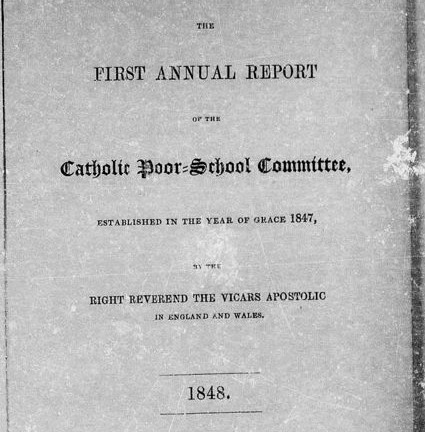
In part one, I am going to explore the history of how we managed to secure our current settlement, reflecting on the common thread that binds nearly two centuries’ worth of political battles in pursuit of our right to educate our children within our own faith tradition. I will make the claim that the best way to understand our current challenges is to understand better the battles we have had to fight – and the compromises we have had to make – to get here. This account will inevitably paint in broad brush strokes, trying to avoid the numerous side roads and rabbit holes that would accompany a fuller treatment of this subject.
In the second part, I will examine how our understanding of mission in schools has evolved – often in response to changing social and demographic realities – bringing with it a drift in how we define our work in schools. I will outline how this has necessitated an increasingly firm Catholic version of the ‘thin blue line’, operating both at national policy level, and locally through the efforts of a small number of people tasked with oversight of a rapidly changing context.
Following this, I will explore how our system is predicated on a set of cultural conditions that once enabled effective self-government, but which now no longer exist – or at least, no longer exist in the same clear way. This change has impacted all levels of our mission in schools, making it more difficult to act as a unified, coherent whole to protect our rights and freedoms, but also the distinctiveness of what we are able to offer – encompassing everything from curriculum to staffing, to training and formation, and even how we justify our work and understand success. I will also demonstrate how some of our contemporary anxieties echo throughout our history, even from the earliest days, and are not unique to to our current context.
Finally, I will reflect on what this changed environment might mean for our schools, and what we must consider if we are to respond to the challenges set out in Part 3. In brief terms, I will be asking what our priorities should be when we simultaneously find ourselves arguably never having had it so (politically) good, even whilst facing a different type of existential challenge that has the potential to derail the whole project.
If you manage to stick with me through all that, I will be beyond impressed and will happily nominate you for your own Benemerenti.
The first part will follow in the next few days and – to give you fair warning – will be the longest. I hope for the others to follow on a weekly basis.






Leave a Reply