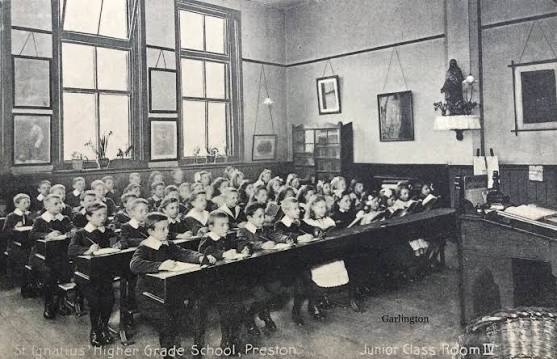
‘Only take heed, and keep your soul diligently, lest you forget the things which your eyes have seen, and lest they depart from your heart all the days of your life; make them known to your children and your children’s children’ (Deut 4:9)
Moses delivered these words to his people as they stood on the cusp of the promised land. He knew that the next steps into a land that promised an era of comfort and plenty brought its own risks. A people who forgot their difficult journey through the wilderness would risk becoming detached from the sacrifices that brought them to this place; they would risk casting aside the rituals and observances that kept them together through those wandering years – they would risk losing God. As the older generations died and took their memories with them, the warning to the younger generations was clear: survival depended on remembering the struggles their forebears went through to grant them this inheritance, and they had to remain vigilant to protect what had delivered such plenty but which could be taken away from them again through lack of vigilance.
During my time as a Headteacher at St. Cuthbert’s school in Carlisle, I found an original school Log Book dating from 1871, with completed entries running for what I would guess must have been about 10 years. It was a fascinating read – not least for the beautiful handwritten entries from Canon Waterton performing his ad hoc inspections, the significance of which I did not realise at the time – but also for the insights into the daily rhythms of Catholic school life in the nineteenth century.
What most fascinated me was the curriculum, laying out at the start of each year exactly what would be taught, a fascinating resource which inspired various talks and papers I gave at the time. But it was the history classes that most caught my eye, and more specifically what the chosen content revealed; it was clear that our forebears saw themselves, being Catholics, as a distinct people, with a specific history, in a specific place. Untouched by the deconstruction and cynicism of today, they saw there was a particular story to tell – our story – and set out in the Log Book were a series of lessons that revealed the shape of that story for the modern reader. Broadly, it was the history of Christianity in these islands; specifically, it was the Catholic story of ourselves.
I bring this up because that Log Book reveals a truth that we must keep at the forefront when considering what follows in this essay: broadly, that we must enter into the minds of those who fought the battles that would eventually lead to the educational settlement we have inherited today. It would be easy to cast these attitudes aside as relics of a different time, no longer required nor beneficial in our current time. My contention in what follows is the opposite: that those perspectives, what I refer to during induction sessions as our ways of seeing and our ways of being, are vital for any clear understanding of the current context of our schools settlement and how we might respond to the challenges currently faced by it. In short, the best way to understand the condition of Catholic education today is to recognise it as in continuity with the pressures and priorities often long forgotten, but still as relevant today as ever.
i – Out of the shadows
As stated above, the story of Catholic education in post-Reformation England is the story of a people with a story acting in concert to overcome the political and social obstacles of a society that was hostile to them. This is not to say that the Catholic population was a monolithic bloc, and the social and economic diversity that had always marked recusant England was joined by a growing ethnic diversity serving the infrastructure needs of the Industrial Revolution from the late eighteenth century onward. As such, the Catholic population broadly comprised of a quiet but deeply-rooted strand of recusant English Catholicism, clinging on in rural houses and more or less secret observance in more urban settings, later to be joined by a vast and quite sudden influx of Irish Catholics, mostly confined to large urban centres or industrial heartlands, firstly taking advantage of cheap steamship travel in the early nineteenth century and then fleeing the tragedies of the Great Famine in the middle of the century.
Yet, as both these strands faced the same hostile attitudes and the penal laws, they acted in each other’s interests, both in terms of wider discrimination but also with respect to the education of their children. This solidarity was not only the unity of a shared creed, but rather a matter of social survival in a society whose politicians were often moving quicker than the wider public in taking gradually gentler attitudes toward Catholics. This was vividly on display in the Gordon Riots of 1780, when the prospect of even the mildest relief measures for Catholics (via the previously passed Catholic Relief Act of 1778) triggered a week of anti-Catholic violence, as the inflammatory rhetoric of Lord George Gordon combined with wider prejudices to create a week of violence and looting that would lead to Lord Gordon being tried for high treason. As a neat illustration of the point, he was found not guilty after his lawyer – Thomas Erskine – successfully argued that in causing these riots against Catholic relief, Lord Gordon was seeking to protect his country, not harm it.
At this point, and until the Roman Catholic Relief Act of 1791, the provision of a Catholic education was prohibited by law. For wealthier families, this could be circumvented by sending a child away to the continent, gaining access to a sophisticated European education while enabling Catholic formation at institutions run by religious orders, in schools such as Douai or St Omer for the boys, or in the convents at Louvain or Cambrai for the girls. In some cases, particularly for younger children, this was supplemented at home by ‘private tutors’ – this often doubling up as a useful alibi for a priest in hiding, as in the case of the touring tutor and priest Fr Richard Lassels, whose posthumous Voyage to Italy became the template for the aristocratic grand tour. This phenomenon, whilst an understandable piece of recusant self-preservation, nonetheless further cemented wider prejudice against Jesuit priests in particular as wily agents of treason, as in Thackeray’s 1852 novel The History of Henry Esmond, where the crafty old private tutor Fr Holt is portrayed as the seditious agent willing to use individuals as chess pieces for the greater project of restoring the Jacobite line to the throne.
For the poor, however, a continental escape route had never been an option. As such, there grew a complex set of clandestine operations dedicated to providing a Catholic education for poor Catholic children, with secret classes held in secret rooms, or barns, or other secluded places. For the gentry, there was also a system of illegal schools, highly complex (and expensive) operations run out of country houses, such as that at Stanley Grange, whose existence was almost entirely due to the courage and wit of Lady Anne Vaux, one of the most important (if sadly too-little known) figures of recusant England.
The need for secrecy was simple: the punishments for breaking the law were severe, ranging from heavy fines to life imprisonment. The Popery Act of 1698 strictly banned any Catholic from teaching, including acting as a tutor, under pain of lifetime imprisonment if caught.
As such, educating children in the Catholic faith came at great risk, meaning that from the outset a determination to provide a Catholic education sat alongside a deep-seated vigilance and the certain knowledge that the law, and no less the lawmakers, might not always play fair. This proved a unifying force, over time bringing together what might otherwise have been distinct tribes, with English Catholic aristocratic families serving the mission by using their social standing and influence to advocate for a wider cause that was primarily in the interests of poorer Catholics, which within a rapidly changing England meant poor Catholics of both English and Irish background.
The need to prioritise education was no less clear, and was couched in theological reasoning, even if it also had practical justifications. In short, the lack of capacity amongst parents to educate their own children – be that because of their own levels of education, or because of the punishing work expectations of the Industrial Revolution – was met by the acute awareness that, as much as it was also partly about preserving heritage and identity, the need for Catholic education was primarily about the sacred duty of parents to educate their child, and particularly so in matters of faith. This propositional case – that education is the fundamental duty and responsibility of parents – is one we have stopped making politically, and I think it will prove an historic mistake. Whilst a nod to this reality still exists in the Education Act of 1996, nonetheless it has been notably absent from recent political debates, particularly about homeschooling and independent schooling, a drift that leaves us all the more vulnerable.
Still, in a world in which passing on the faith was seen as a first-order endeavour, and in which all formal (and legal) options for education were not only not Catholic, but usually actively hostile to Catholicism, so the Church saw the education of children as key evangelising mission as much as an act of solidarity with the poor.
They were helped in these matters by the slow erosion of the penal settlement from the late eighteenth century onwards. This did not come about by a sudden bout of benevolence amongst the ruling classes, but by a mixture of wider political trends – not least the security fears of a volatile Ireland and the desperate need for soldiers of a stretched British imperial project trying to face down an American rebellion – but also through the courage of individuals who could force the injustice of the penal laws into the public consciousness.
As an example of the latter, one can find few better examples than Ann Fenwick of my own Diocese, up in Lancaster, who established the mission at Hornby Hall, which remains to this day. Having transferred her considerable fortune to her Protestant husband to support his business ventures, she found herself completely disinherited following his death in a hunting accident, as the law barred Catholics from inheriting property from Protestants. Her fortune defaulted to her brother-in-law, Thomas Fenwick MP, who initially promised to look after Ann but – in scenes surely not far from the thoughts of Austen in the writing of John Dashwood in Sense and Sensibility, who betrays his father’s wishes to take care of his stepmother and half sisters through a slow rationalisation of his own greed – reduced the support offered such that Ann’s fortune was all but stolen. This betrayal was so egregious, and so manifestly an unjust situation made possible by the penal laws, that Ann pursued him through the courts for twelve years, finally winning her case in 1772 (1). This was one small crack in the legal dam of the penal laws, but it showed that it was suddenly vulnerable.
Whilst changing political realities sometimes forced the state’s hand, the resulting legislative shifts were rarely mere acts of benign tolerance, and the Roman Catholic Relief Act of 1791, which permitted Catholics to teach and open schools, came tightly tethered to the requirement of an oath of allegiance – a recurrence of the deep-set prejudice that cast Catholics as an enemy within, with cliches lifted almost direct from William Cecil’s Elizabethan-era rationalisation of anti-Catholic persecution in the Execution of Justice in England. These dynamics overlapped with the Irish question; old prejudices against Catholics as being loyal to a foreign ruler could be seamlessly transposed onto the growing Irish population in English industrial cities, whose loyalty to England could not be presumed. In other words, even at the point when Catholics were finally allowed to educate their children, it came with a need to scratch an anti-Catholic itch that still animated the begrudging legislators of this same freedom.
Whilst some voting rights (as long as certain property thresholds were met) had already been given to Catholics in Ireland in 1793, it was not until 1829 and the Catholic Emancipation Act that Catholics in England were allowed to vote and to sit in Parliament. This triggered a prolonged cultural backlash which was to erupt, decades later, during the “Papal Aggression” crisis of 1850, when the formal re-establishment of the Catholic hierarchy was met with street effigies and allegations of foreign subversion. This was weaponised even within the highest offices of the land, as when William Gladstone published his famous 1874 pamphlet, The Vatican Decrees in their Bearing on Civil Allegiance, which suggested that the recently defined doctrine of papal infallibility meant that no one could convert to Rome without renouncing their moral and intellectual freedom – and thus, as per the old clichés, that each Catholic was subject to serious doubts regarding their civic loyalties.
Though St. John Henry Newman’s subsequent rebuttal, in his A Letter Addressed to His Grace the Duke of Norfolk, can be said with hindsight to have won the historical argument, the episode demonstrated just how the relationship between the State and the Catholic population remained forged in suspicion from above, and a fiercely protected independence from below. In other words, every apparent step forward required the Catholic population to look past the surface ‘progress’ that was promised, and to remain vigilant to the possibility of systemic threats hidden within it
Nonetheless, change was happening, and as the political prospects (and leverage) of the Catholic population grew, so the opportunity to press their claims became more accessible, the foremost of which including the right to educate their children in a manner they saw fit.
ii – Toward the light
Even as tolerance grew, the reality of trying to build a school system, from scratch, in the midst of the crushing poverty of the Industrial Revolution, was an uphill struggle. Schooling was not funded by the state and thus still tied to private wealth, since each family had to pay the ‘school pence’, a cost that was effectively doubled by the loss of a child’s potential income through work in the factories. Whilst the 1833 Factory Act helped with this by restricting working in the factories for those 9 and under, it didn’t stop children from labouring in the home, and it wasn’t until 1880 that elementary schooling was made fully compulsory. Sunday schools emerged as a partial solution to these problems, providing support for basic literacy and faith formation, as in the case of Jesuit priest Father Johnson, who founded a Catholic Sunday school in Richmond, North Yorkshire, in 1818 (2).
Still, the lack of central planning and organisation to oversee these organic efforts was recognised as a strategic weakness, and in 1838 the Catholic Institute was founded to provide organisational and administrative support for religious education. It published prayer books and catechisms, but it did not have the financial means to solve the key problem faced by the poorest Catholic areas: that most Catholic children could not attend a Catholic school due to poverty, and that those who did – however intermittently – were often taught in poor material conditions that inevitably impacted on the quality of education available.
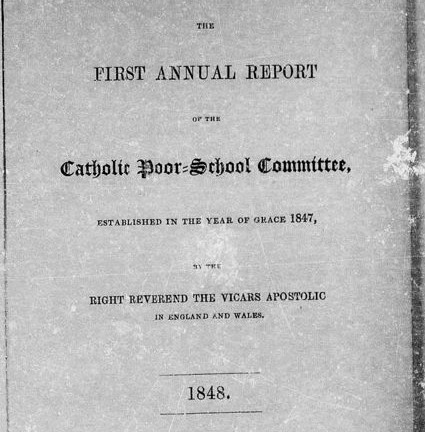
Something more was needed, and this came in the guise of the Catholic Poor Schools Committee, founded in 1847 and chaired by Charles Langdale, one of the first Catholic politicians elected following the Catholic Emancipation Act of 1829 until his retirement in 1841. This committee was founded to distribute state grants, which had been available to protestant schools since 1833, but which Catholics were unable to access since the aid was funnelled through two non-Catholic organisations, the National Society for Promoting the Education of the Poor (Church of England) and the British and Foreign School Society (non-conformist).
This grant aid system came with a new regime of inspection, but since it refused to accommodate Catholic education – by refusing to agree to demands that Catholic schools should only be inspected by Catholic inspectors – so Catholic schools chose not to access this vital funding stream, choosing instead to lobby intensively for fair and equitable access. It is worth pausing to underline a key point here: that the Catholic community chose to alienate itself from potential funding rather than compromise on what it saw as a fundamental principle in relation to its independence and capacity to act as an authentically Catholic school. Quite apart from this being an astonishing display of discipline and fortitude amongst the Catholic community, it also demonstrates the way in which long-term strategic risk was held as superior to immediate material needs, with both laity and religious willing to endure hardship in order to ensure any support came was accepted on terms that would not tilt the playing fields against our schools.
By 1847 the Catholic population was successful in their lobbying, and secured both the right for schools to be inspected by a Catholic, and for Religious Education not to be inspected at all. With this, the majority of Catholic schools began to accept grant aid. Whilst this battle had to be fought again 15 years later (see below) – thus confirming the wisdom of this initial caution – nonetheless these vital concessions meant Catholic schools were protected from potential bias in the judgements of the inspectors that guided the grant-awarding body. This was a significant milestone – though as we shall see, not all of the terms of that access were ultimately acceptable, and the fight was not over.
By the time the Hierarchy was re-established in 1850, with 13 dioceses created and the Archdiocese of Westminster led by the newly-appointed Cardinal Wiseman, education had become a primary issue for the Catholic Bishops. In the first Synod of the English and Welsh Bishops – the Synod of Westminster – held in 1852 at Oscott, the matter was put plainly: parishes should ‘…prefer the establishment of good schools to every other work. Indeed, wherever there may seem to be an opening for a new mission, we should prefer the erection of a school, so arranged as to serve temporarily for a chapel, to that of a church without one.’ (3) In practical terms, this often meant parishes built single-room schools which could double up as centres for Mass, which is why so many of school halls still today contain traces of ecclesial architecture – from lancet windows to ornate eastern ends – that belies the of the building history as both a school and a centre of Catholic worship.
Whilst the ultimate test of vigilance was to arrive later with the Forster Act of 1870, its direct precedent – a Royal Commission into the state of primary schooling in England, called the Newcastle Commission – laid the ground for what was to come. The English Bishops, led by Cardinal Wiseman, were immediately suspicious of this work, not least because of the repeated refusal of the Commission to have a Catholic on its panel. The Bishops perceived – rightly, as it turned out – that not only was the Newcastle Commission intent on rowing back the agreements of 1847 that only Catholics should inspect Catholic schools, but there was also a feeling that this was a precursor to an attack on denominational schooling per se, as government had become alarmed at the rising costs of supporting the grant-aid system for voluntary (for which read denominational) schooling.
So, faced with this hurdle, the Bishops led from the front – they simply refused to co-operate. As Cardinal Wiseman wrote in a Pastoral Letter in 1859, in response to lay queries about why the Bishops would not work with the Commission: ‘We knew by experience, as well as from the very nature of the case, how difficult, not to say impossible, it is for a commission to draw just inferences, or judge accurately where Catholic education is concerned, without any competent person assisting to give explanations. It was therefore considered all-important to obtain the addition of one single Catholic to the Commission. This was peremptorily refused, and all negotiations ceased.’(4)
Bishop Ullathorne of Birmingham, in a Pastoral Letter written for the same purpose, put the matter even more succinctly: ‘It is a precedent, and may be followed by others. The question is one of principle; and a principle given up once, is a principle for ever surrendered. By the very fact of that surrender, it ceases to be accounted for a principle.’(5). For those working in Catholic education today, these words have never rung more true.
The Newcastle Commission completed its work, and amongst its outcomes was the later implementation of a Revised Code which paid grants to voluntary schools according to results. In poor Catholic areas, with sporadic attendance, this was seen rightly as an attempted squeeze on funding. Furthermore, with so many inner-city parishes suffering with extreme rates of poverty, payment linked to the passing of exams meant that schools faced significant budget cuts. As was so often the case, the lobbying efforts intensified, but alongside this came an internal response, and the Catholic Poor School Committee intensified their teacher training efforts – originally at St Mary’s, Hammersmith in 1850 for men and Mount Pleasant, Liverpool in 1856 for women – while religious orders such as the Sisters of Mercy and the Christian Brothers rallied to working-class areas, providing teachers without the same salary demands of lay teachers and thus helping keep schools afloat.
Still, the political winds were blowing in one direction, and that was toward more central control of a system that had hitherto grown organically, but whose unplanned nature was causing a growth in costs which the State was finding difficult to control. In addition, from the perspective of a growing number, it was not clear that this was money well spent since the quality of education – and the outcomes of the children – were variable, and it was recognised that non- or intermittent attendance at school was one of the key factors at play.
So, in 1870, the government introduced the Forster Act, which established Board schools to provide sufficient places for all children, still at a cost but with the discretion to waive fees for the poorest children. Whilst on the surface a benign move, it came with a set of conditions that were seen as a systemic threat, since the Board were not only resolutely non-denominational (whilst still featuring prayer and religious instruction – which, in a protestant society, effectively meant a protestant understanding of formation), but they also had the potential to hinder the establishment and support of local Catholic schools by deeming them unnecessary, determining that places held within the Board schools were sufficient for Catholic children without need for a specifically Catholic school.
Despite the protests of the Catholic community, the government pushed ahead and the Forster Act legislation gave voluntary schools just six months as a grace period before all future building grants for voluntary schools would be stopped. This led to a major effort in the parishes to raise funds, often through ‘penny-a-week’ collections, supplemented by donation from wealthier families. Within those six months, the Catholic population rallied and the legacy of such mobilisation was staggering: over the next fifteen years, the number of Catholic schools grew from 350 to 892. (6)
The outcome was a great many of the buildings we inherit today, though the (unintended?) consequence at the time was the building of an unequal system that pitted shiny, state-built and maintained Board schools against an older Catholic stock whose maintenance was often beyond the means of the Catholic population that built them. There were strategic wins too – the Forster Act was clear in its recognition that these were our schools – but with it came tactical losses: since many Anglican parishes gave up their schools to be controlled by the Boards, the effect was an imbalance in which Boards – populated by everyone-but-the-Catholics – could veto future Catholic school growth as unnecessary.
As such, the school Boards became the backdrop for furious local political battles, and a proxy for wider prejudices against the Catholic population. To make matters worse, Catholics had to pay for the privilege: in addition to still having to find the ‘school pence’ for their own schools, they now had to pay through local rates to fund the school Boards too.
The response, as ever, was to organise: it became a priority to get Catholics elected onto local school Boards to ensure that Catholic provision was not hampered by local politics and wider prejudices. This was particularly the case in the urban centres, for example in Liverpool, where local School Boards became the setting for a political rivalry between competing religious factions, whilst in Manchester the Board ‘had a majority of Churchmen and Roman Catholics for the whole of its existence, and these members were elected primarily to see that the new Board schools which they had to manage did as little damage as possible to their own schools, in which many of them were naturally more interested.’ (7)
The increasing entry of Catholics into public life – partly a consequence of greater political enfranchisement – was paying dividends, but it was a collective and conscious effort of the whole Catholic community to maximise the gains of this access.
Whilst the less palatable aspects of the Board School system were working their way out, a wider political campaign turned toward securing equal rate funding, so that Catholic education could be recognised as equal partners with the Boards in the delivery of education and not have to go cap-in-hand for funding to bodies which very often did not have their best interests at heart.
As a result, Bishop Vaughan founded the Voluntary Schools Association in 1884, which campaigned against the unfair 17s 6d grant limit that capped state funding unless matched by private funds – an obvious obstacle for poor Catholic families. Indeed, Vaughan himself noted that for the 17 shillings per child paid to the Board schools out of the rates, denominational equivalents were able to raise an average of just 6s 10d in voluntary subscriptions. The difference wasn’t able to be made up out of any other pot; the schools just had to go without the funding, much to the detriment of their condition and the quality of education they could provide. The result was a slow financial suffocation of Catholic schools: ‘The new requirements of successive Codes resulted in an ever-increasing expenditure, which the School Boards, with their hands in the bottomless pockets of the ratepayers, could meet cheerfully enough, but which to the Voluntary schools meant ruin. In 1884 already more than a thousand Voluntary schools had given up the struggle and surrendered to the Boards, and there were few thoughtful men who did not look upon the disappearance of the whole denominational system as one of the certainties of the near future.’ (8)
Further, there was a question of dignity amidst the inequality. The Catholic community lobbied against the way Catholic families had to present themselves in person to the Boards to request rate-relief on account of poverty, something which parents whose children attended Board schools did not have to do. For poor families, sometimes with poor education levels themselves, losing a day’s pay, and facing an often hostile audience, this was as humiliating as it was unjust. Vaughan also established the first Diocesan Board of Education whilst in Salford, rolling the model out nationally when he became Archbishop of Westminster in 1892.
Nonetheless, for all its problems, looking back we might say that the Forster Act gave the growing Catholic working class access to real local political leverage, as the local Boards which could so impact on Catholic schools became targets of organised lobbying and resistance. To quote Professor Nicole Garnett, talking recently on the establishment of Catholic schools over in the United States – a story that bears striking resemblance to our own – the Catholic schools system was founded on a ‘spirit of protest’ (9); we were building a system from nothing, often with nothing, and with a population who were very often on the margins of society. And yet with that spirit of protest, and discipline, and collective organisation, and bloody-minded pursuit of our interests, we made extraordinary gains.
It is worth noting at this point that with each success came a new set of reconfigured tactical and strategic risks that required further reflection. For example, at the same time as the hierarchy and wider Catholic population were battling so fiercely to preserve an authentically Catholic elementary schooling, so for the same reason other wider political freedoms for Catholics that might have been apparent causes for celebration were nonetheless greeted with caution. This, one supposes, is the nature of a principle: it looks different in different contexts. So for example, with the passing of the Universities Tests Acts of 1871, which finally allowed non-Anglicans to take up degrees at Oxford and Cambridge, there was concern – first with Vaughan and then particularly Manning – about the risk of a secularising ‘rationalism’ that could spread through the Catholic population. In the end, it was decided that with mitigations – not least effective chaplaincy support – Catholics could attend these universities, but it was not until a Vatican decree of 1895 that Catholics were formally granted permission to attend these institutions.
Still, the battle went on and, with the passing of the Elementary Education Act of 1891, which replaced the ‘school pence’ with a fee grant from government, and then latterly the Voluntary Schools Act of 1897, which increased the grant for denominational schools, things were definitely on the up. This is not to say there was universal contentment – as so often throughout our history, increased dependence on the state came with a fear of loss of independence and over-reliance on a potentially hostile force – but Catholic education had come a long way since the first Relief Act of 1791. There were still battles to fight, not least that whilst Catholic schools were now free to attend, they still did not have equal access to funds for buildings maintenance and teacher-salaries that state-run schools enjoyed, but the proliferation of teaching Religious Orders helped mask this injustice, whilst the coming of the Balfour Act in 1902 – which abolished the Board and created LEAs which funded voluntary schools out of local rates – Catholic schools finally had fair claim to the mantle of equal partners in the educational landscape of the nation.
There were compromises however, and the Kenyon-Slaney amendment – which, partly in response to a vocal push against public funding for denominational education amongst the political classes, stripped parish priests of the sole right of visitation over religious education and instead gave it to the board management which consisted of 4 foundation appointees and two local authority members – was fiercely contested by clergy. One can still see this principle at work in the governance of Voluntary Aided schools today.
Nonetheless, the principle of Voluntary schools was established (not just in England) as a sort of best fit between Catholic principle and state support, with Pope Leo XIII writing to the English Bishops in 1885: ‘We strongly approve of the Voluntary schools… We desire their increase, as much as possible, and that they may flourish in the number of their scholars. We Ourselves also, seeing the condition of things in this city, continue, with the greatest effort and at great cost, to provide an abundance of such schools for the children of Rome. For it is in and by these schools that the Catholic faith, our greatest and best inheritance, is preserved whole and entire. In these schools the liberty of parents is respected; and, what is most needed, especially in the prevailing license of opinion and of action, it is by these schools that good citizens are brought up for the State; for there is no better citizen than the man who has believed and practiced the Christian faith from his childhood.’ (10)
iii – Butler and beyond
This is not to say the new system resolved all the old issues and wider societal battles still needed to be won. From my own neck of the woods, there are surely few Catholics from north Cumbria ignorant of the monumental efforts of Canon Begley, and the protracted fight he underwent to secure a Catholic school for the children of Currock and Upperby in Carlisle, in the face of an implacable Board determined not to grant such wishes (a fascinating account – which demonstrates so much of what was discussed in the previous section – is available here.)
It was not until the next major change to English Catholic education – with the Butler Act of 1944 – that there was to be significant change. As above, the Butler Act brought to the fore this delicate balance between state support and state interference, with many Cahotlics – and no less the Bishops – cautious of the risks to the independence of Catholic schools that could come by taking on ever closer union with the State. The different ways of seeing and approaching education between Church and State took the lion’s share of debate, and was never ultimately resolved – in the end, it became about what trade-offs were deemed palatable for greater levels of security. In the end, the Butler Act created a Voluntary Aided framework that allowed dioceses to retain control over governance, key staff appointments, and religious instruction, thus providing sufficient reassurance that dioceses would retain ultimate control of their schools.
However, there was a sting in the tail – Section 102 of the Act stated that the government would only pay half of all capital building costs and external repair, with the other half having to be found by the school itself. For many parishes, particularly poorer ones, this was a huge burden, leading some to take loans to fund the maintenance of their schools (these loans were often secured from the diocese, whose own resources – especially in the more newly created dioceses, with less access to historic endowments – were often very limited. Decades of lobbying proved successful in bringing these contributions down, from the original 50% of the 1944 Act, down to the 10% statutory contribution that Voluntary Aided schools are still expected to contribute today.
Whilst we have so far focussed almost exclusively on the battle to establish sustainable and authentic primary – or what was then referred to as elementary – education, the Butler Act marked a fundamental pivot, as it was the moment the State sought to bring secondary education into similar levels of provision, opening up a whole new set of opportunities, and risks, for the Catholic community. This is a subject that deserves its own overview, and is certainly beyond the scope of this post here, but the history of our battle for secondary education – and equally the history of Catholic independent schooling – is fascinating for what it tells us about how we have historically viewed our partnership with the state, and in particular where we have felt the greatest need to police our boundaries.
There is much more to be said about the middle and late-twentieth century, and I propose not to do so as this post is already long enough and the principle I have been seeking to establish has, I hope, been adequately made. Suffice to say that, with changes to curriculum, admissions, employment rights, qualifications, capital funding, and much else besides, the Catholic education sector has had to stay on its toes in ensuring all of these changes complement – rather than compromise – the mission in schools.
And this is not to mention academies, which for reasons of prudence I may return to in a standalone post in future; nonetheless I would hope that those who have managed to persevere this far can see which way the needle is pointing, and will intuit the rationale for why it has been seen as both prudent and desirable for all Catholic dioceses to academise their schools estate.
iv – Conclusion
In closing this post, it is worth pausing to reinforce the point made when we started. The education settlement we have today is the inheritance of a people who recognised that we have a self-interest, and that it was in our interest to pursue it. They built an education system from scratch, in the teeth of opposition, and did so by unapologetically advocating for the distinctiveness of our view of education, and who it was established to serve. And whilst it might be tempting to believe that our own position today differs markedly from the battles that had to be fought then, such that we need lay such great stress on vigilance to threat and opposition, I would invite you to read the next instalment where I will talk through some of the ways in which this cannot always be assumed.
There is a history of effective collaboration between the Catholic Church and the state, with good and fair-minded people – be that in local authorities, government, or elsewhere – supporting us in being able to provide a Catholic education for the children in our care. However, if we are to remember our inheritance, it is vital that we also remember our history, for it is this that makes sense of how we have what we have and the decisions we must make in order to preserve it.
Fundamentally, our forebears in faith held one thing central: they wanted a Catholic education for their Catholic child. That remains our goal today.
1 – Ann Fenwick deserves to be much better known – a short history of her battle can be read here: https://annfenwick.co.uk/
2 – A good short history of this period is available through the English Catholic History Association here: https://echa.org.uk/wp-content/uploads/2025/04/5vi-Catholic-Education-1830-1902.pdf
3 – First Provincial Synod of Westminster, Decrees (1852).
4 – From a pastoral letter reproduced by Newman during his brief stint as editor of the Rambler, May 1859.
5 – Ibid.
6 – Derek Gillard’s Education in the UK: a history is a good read and freely available online
7 – Gillard, Education in the UK: a history, Ch 6
8 – Snead-Cox, The Life of Cardinal Vaughan, vol. 2 – one of many texts available on the Internet Archive
9 – Over at the Thomistic Institute podcast – listen here: https://pca.st/episode/ff836753-1bc0-4ad7-8dc7-a4d3cc4ea42c
10 – Pope Leo XIII, Spectata Fides [Encyclical on Christian Education], 27 November 1885



Leave a Reply